Emergency Tree Removal in Cleveland for Fallen or Hazardous Trees
Storm-damaged trees, fallen branches, and unstable vegetation can quickly become serious safety hazards for residential and commercial properties across Cleveland. Severe weather conditions, heavy rainfall, strong winds, and hidden structural defects may cause trees to split, collapse, or develop dangerous hanging limbs that threaten nearby buildings, vehicles, fences, and public access areas. In these situations, fast and professional emergency tree removal becomes essential for restoring property safety and preventing further damage.
Throughout the wider Redland City region, mature trees and large established vegetation can become unstable due to storm exposure, root failure, decay, or excessive canopy weight. Emergency arborist services are commonly required to manage hazardous trees safely, particularly when fallen branches obstruct driveways, trees lean toward structures, or damaged limbs remain suspended after severe weather events.
Professional tree specialists use controlled removal techniques, specialised equipment, and structured safety procedures to assess hazards, dismantle unstable trees, and clear dangerous debris from residential and commercial sites.
Why Emergency Tree Removal Is Important for Hazardous Trees
Hazardous trees may continue shifting or deteriorating after storms, increasing the risk of additional branch failure or structural collapse.
Common emergency tree hazards include:
- Fallen trees blocking accessways
- Split or cracked tree trunks
- Hanging storm-damaged branches
- Leaning trees with unstable roots
- Trees contacting powerlines
- Uprooted trees after heavy rainfall
- Large limbs over roofs or vehicles
Fast emergency response may help reduce further property damage and improve overall site safety.
How Arborists Assess Fallen and Dangerous Trees
Professional arborists generally begin emergency tree removal with a detailed hazard assessment to identify structural risks and determine the safest removal method.
Inspecting Structural Tree Damage
Arborists assess trunk fractures, root movement, canopy imbalance, and branch instability before commencing removal work.
Evaluating Storm-Damaged Branches
Hanging limbs and partially broken branches may remain unstable long after storms have passed.
Assessing Trees Near Buildings and Infrastructure
Emergency crews inspect surrounding homes, garages, fences, roads, and outdoor structures before planning dismantling procedures.
Identifying Powerline and Access Hazards
Trees near electrical infrastructure or restricted access areas may require additional safety precautions and specialised equipment.
Emergency Tree Cutting and Hazardous Tree Removal Methods
Removing hazardous trees often requires controlled dismantling procedures to minimise additional damage during removal.
Sectional Tree Removal for Large Trees
Large hazardous trees are commonly dismantled in smaller sections using ropes, rigging systems, and elevated platforms.
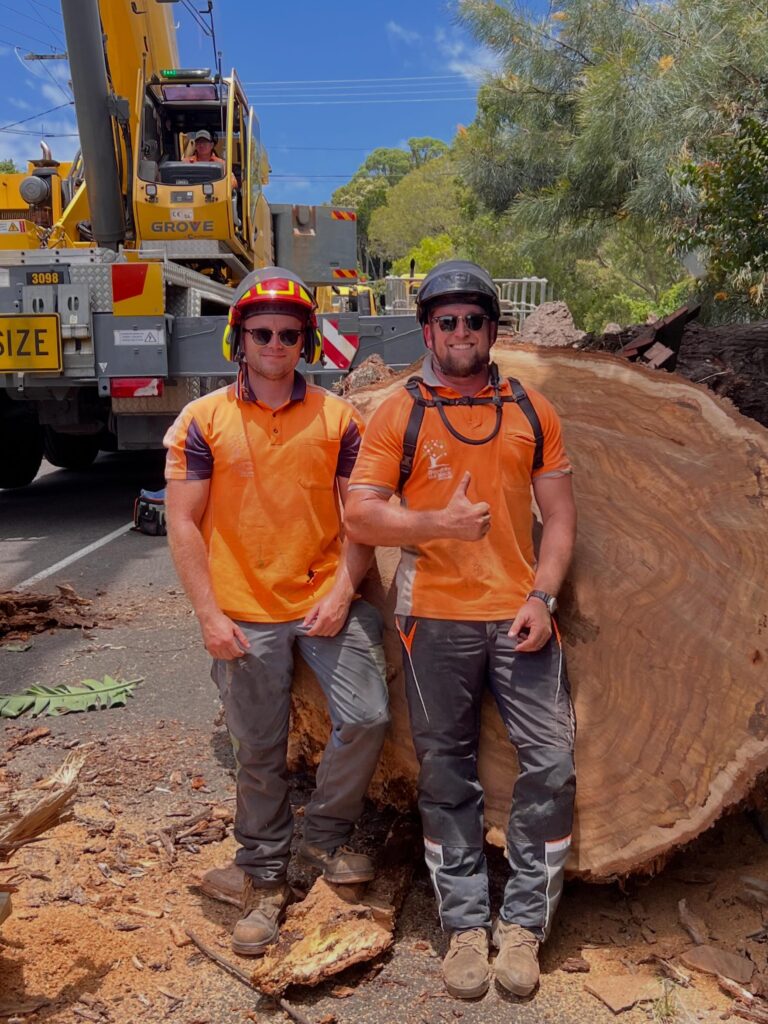
Crane-Assisted Tree Removal for Dangerous Situations
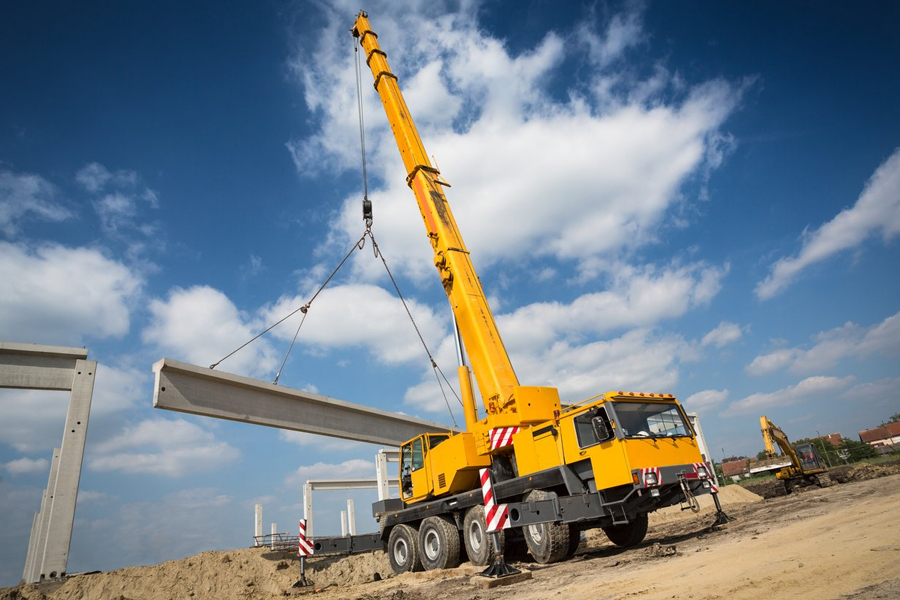
Cranes may be used where damaged trees are unstable, oversized, or difficult to access safely.
Emergency Tree Cutting for Fallen Limbs and Debris
Storm debris and fallen branches are often removed first to restore safe access around properties.
Arborist Services for Storm-Damaged Trees and Vegetation
Emergency arborist services often involve more than removing fallen trees alone. Arborists may also assess nearby vegetation for hidden structural damage and future hazards.
Tree Pruning for Damaged Canopies
Selective pruning may help remove unstable limbs while preserving healthy sections of the tree.
Canopy Reduction for Heavy Branch Weight
Reducing excessive canopy load can improve stability after severe weather events.
Tree Risk Assessments for Nearby Trees
Storms may expose weaknesses in surrounding vegetation that require preventative maintenance.
Stump Grinding and Site Clearing After Emergency Tree Removal
After hazardous trees are removed, leftover stumps and debris can still create issues around residential and commercial sites.
Removing Damaged Root Systems
Unstable root systems may continue affecting surrounding ground conditions after removal.
Clearing Debris and Vegetation Waste
Professional cleanup services help restore safer and cleaner outdoor areas.
Preparing Sites for Landscaping or Repairs
Stump grinding can help prepare damaged areas for rebuilding, landscaping, or future planting.
What to Look for When Hiring Professional Emergency Tree Removal Services in Cleveland
Choosing the right arborist or tree removal company is important when dealing with hazardous trees or storm-related emergencies.
Property owners often look for:
- Qualified and experienced arborists
- Emergency response availability
- Safe tree removal procedures
- Public liability insurance
- Modern tree removal equipment
- Experience with storm-damaged trees
- Hazardous branch removal expertise
- Complete debris cleanup services
- Tree pruning and stump grinding solutions
- Reliable vegetation management support
Professional tree specialists who provide structured safety procedures, efficient response times, and controlled removal methods can help reduce additional risks during hazardous tree situations. Many homeowners and businesses searching for fast tree removal in Cleveland are often looking for experienced arborists who can respond quickly to fallen trees, dangerous branches, and storm-damaged vegetation before conditions worsen.
Need Fast Emergency Tree Removal in Cleveland? Contact Experienced Arborists for Hazardous Tree and Storm Damage Services
Fallen trees, storm-damaged branches, and unstable vegetation can quickly create dangerous conditions for homes, businesses, and public access areas across Cleveland. Without fast professional attention, hazardous trees may continue shifting, increase structural damage risks, and create ongoing safety concerns around residential and commercial properties.
Experienced arborists and professional tree services throughout Redland City assist with emergency tree removal, hazardous branch removal, storm damage cleanup, tree cutting, stump grinding, and vegetation management for fallen or dangerous trees. Using specialised equipment and controlled removal methods, professional crews can help restore safer conditions while minimising additional property damage.
If your property has fallen trees, dangerous hanging branches, leaning trees, or storm-related vegetation damage, arranging emergency arborist services early can help reduce safety risks and ensure hazardous trees are managed safely and efficiently.